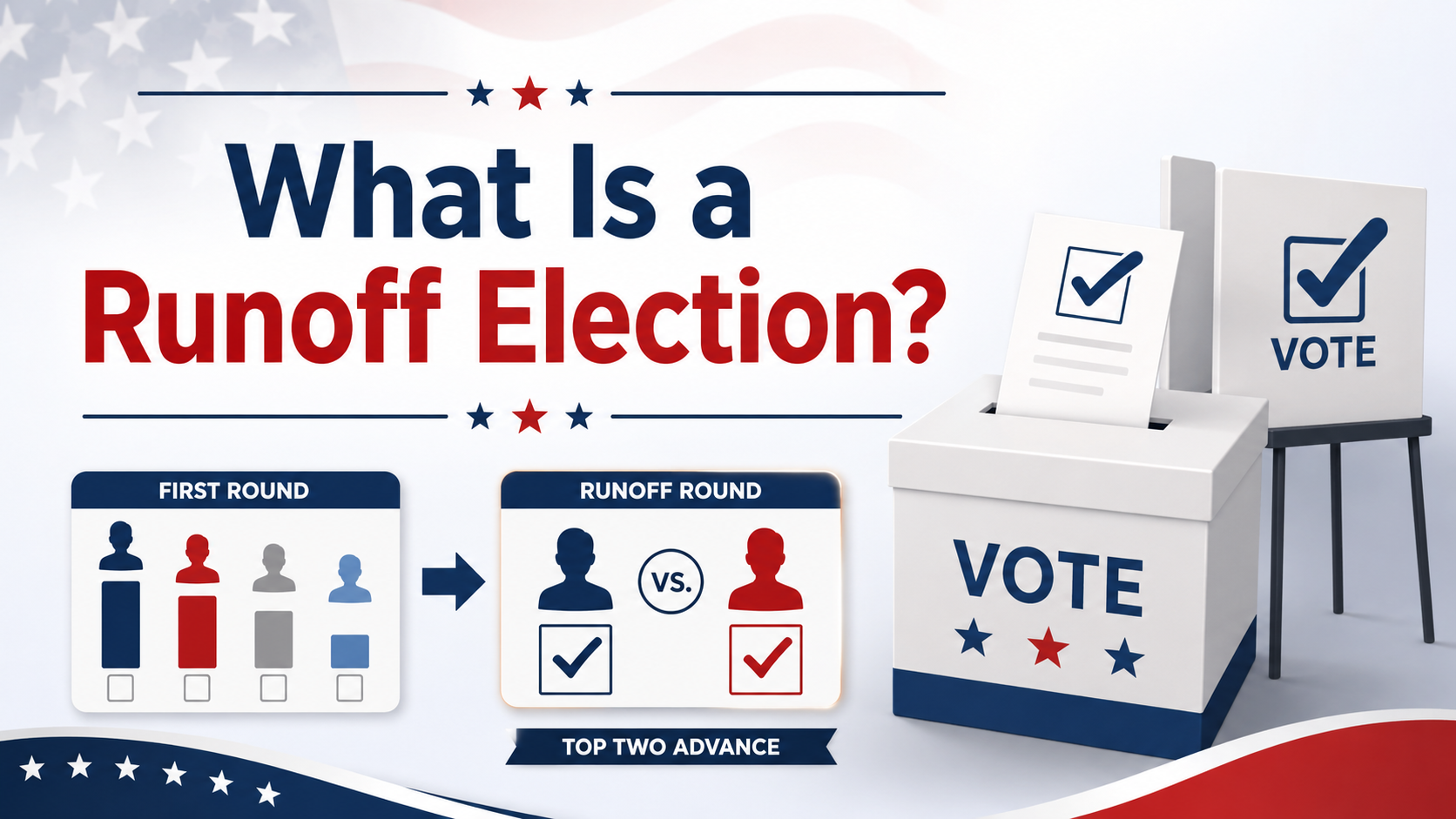
After an election, most people expect the winner to be clear right away. One person gets the most votes, the race is over, and everybody moves on. But that is not always how it works. Sometimes a race goes into what is called a runoff election.
A runoff election is basically a second round of voting. It happens when no candidate gets enough votes to win the first time. In Georgia, candidates in many state and federal races generally need to receive more than 50% of the vote to avoid a runoff. If nobody reaches that mark, the top two candidates move on to another election.
Think of it like overtime in sports. Somebody may have been leading at the end of regulation, but they did not finish the job under the rules. So now the top two get one more head to head matchup and voters decide the final winner.
For example, let’s say three candidates are running:
Candidate A gets 43%
Candidate B gets 36%
Candidate C gets 21%
Candidate A got the most votes, but they did not get over 50%. So Candidate A and Candidate B would go to a runoff, while Candidate C would be eliminated.
This is why you may hear people say “That race is not over yet.” The first election narrowed the field down, but the runoff decides the final result.
This matters right now because Georgia just held its May 19, 2026 primary elections, and several races are heading to runoffs on June 16, 2026. Reports noted that multiple high profile Georgia races did not produce a candidate with the required majority, which means voters will have to come back and choose between the top two candidates.
There are different types of runoffs. A primary runoff decides who becomes a party’s nominee. So if it is a Republican primary runoff, the winner becomes the Republican candidate for the general election. If it is a Democratic primary runoff, the winner becomes the Democratic candidate.
A general election runoff is different. That happens after the November election if nobody wins the required amount of votes. In that case, the runoff decides who actually takes office.
Runoffs can also make campaigns more intense. Candidates who made the top two have to keep raising money, keep talking to voters, and keep their supporters motivated. Voters also have to stay engaged. Sometimes people vote in the first election but skip the runoff and that can change the outcome.
Georgia is known for runoff elections, but not every state handles elections the same way. Some states allow a candidate to win with a plurality, which simply means they got more votes than anyone else even if they did not get over 50%. Other states use primary runoffs but may have different rules or thresholds. The National Conference of State Legislatures notes that several states use primary runoffs to make sure a nominee wins with majority support, but election rules vary from state to state.
Some states also use different systems altogether, like ranked choice voting in certain elections. In those places voters rank candidates by preference, and the counting process can eliminate the need for a separate runoff election.
So when people ask, “Why are we voting again?” the answer is simple: under the rules, nobody won clearly the first time.
I actually think runoffs are important because they force a final choice between the top two candidates. At the same time, I understand why people get tired. Elections already take a lot of attention, and now voters have to show up again. But if we want our voices to count the runoff matters just as much as the first round.
At the end of the day, a runoff election is not a do over. It is the final round.