A few years ago, most people rarely talked about data centers. Now they seem to be appearing everywhere, and many communities are fighting over where they should be built.
So, what exactly is a data center? Well I did some research!
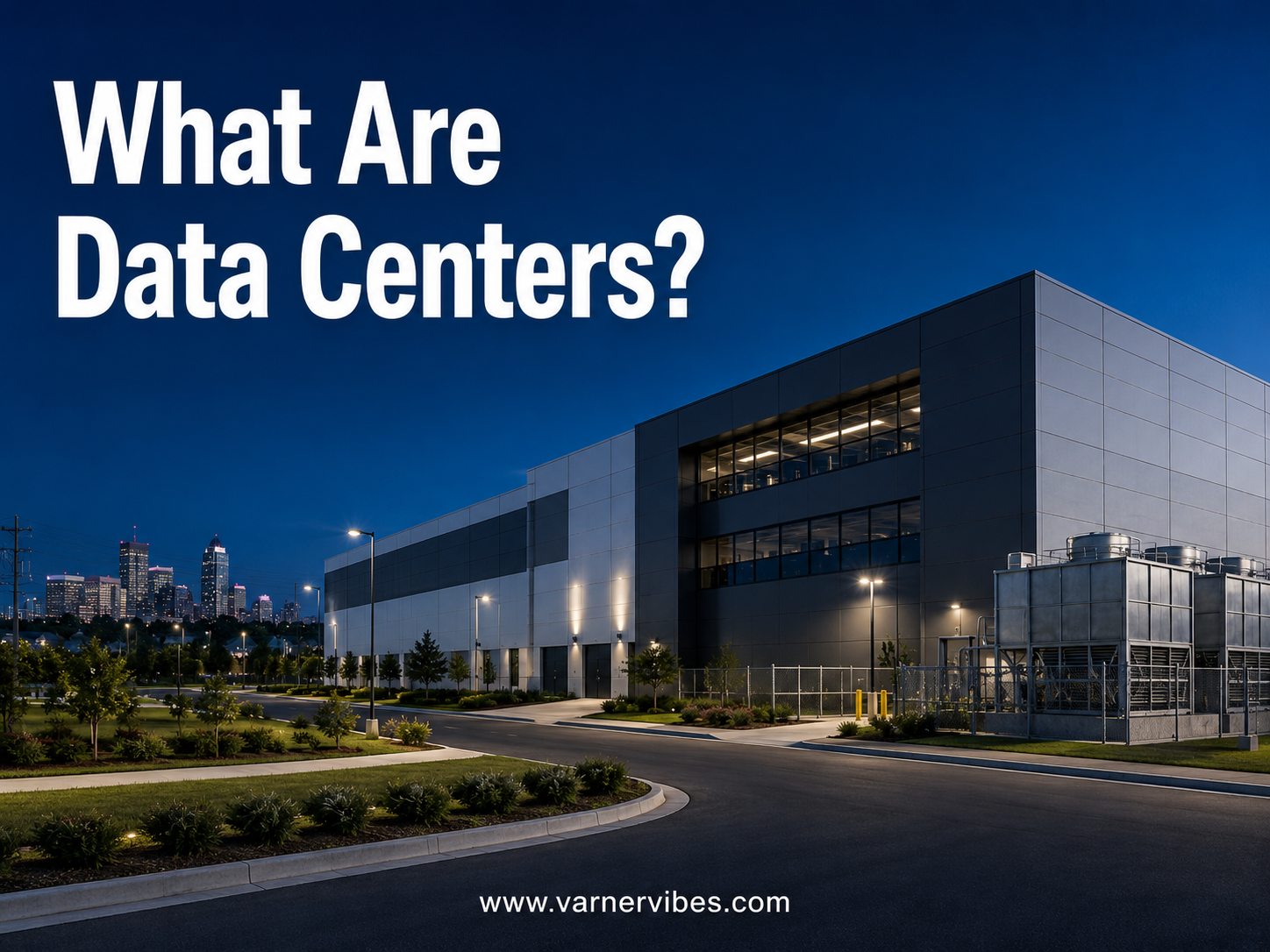
A data center is a large building filled with powerful computers called servers. These servers store, process, and send digital information. Whenever you stream a movie, use online banking, save photos to the cloud, scroll through social media, shop online, or use artificial intelligence, there is a good chance that a data center is working behind the scenes.
Think of a data center as the physical home of the internet. The “cloud” is not floating in the sky. Your information is stored on real equipment inside real buildings.
Why Are Data Centers Growing So Fast?
Our use of technology keeps growing. We are streaming more videos, saving more pictures, using more online services, and depending more on artificial intelligence.
AI is one of the biggest reasons data centers are becoming such a major topic. AI programs need a huge amount of computer power. That power comes from thousands of servers working together.
The U.S. Department of Energy reported that data centers used about 4.4% of the nation’s electricity in 2023. That number could reach between 6.7% and 12% by 2028.
This is no longer something that may happen one day. It is already happening.
Why Are Communities Upset?
I do not believe most people hate data centers. I think they are upset about where they are being placed and who will pay for their impact.
Data centers use large amounts of electricity. Some also use water to keep their equipment cool. They may require new power lines, substations, roads, and other upgrades.
My question is simple… Who pays for that?
These companies are building data centers to make money. There is nothing wrong with making money, but they should pay their fair share for the infrastructure their facilities require. Regular families should not be left paying higher utility bills so a giant technology company can increase its profits.
Location also matters. Huge buildings, cooling equipment, backup generators, and electrical substations do not belong right beside peaceful neighborhoods when better industrial locations are available.
What About Jobs?
Data centers can create many construction jobs while they are being built. Electricians, equipment operators, contractors, security, paramedics, and other workers may benefit during that period.
However, the long term job numbers may not be as impressive as people expect. Once construction is finished, a data center may only need a smaller team for security, maintenance, technology, and daily operations.
Communities should carefully compare the permanent jobs and tax revenue against the power, water, land, and infrastructure the project will use.
Does America Need Data Centers?
Yes.
The United States needs data centers to support businesses, hospitals, banking, national defense, scientific research, emergency systems, and AI development.
Other countries, including China, are also investing heavily in AI and computing power. That does not mean another country automatically receives our personal information by building more data centers. However, where important information is stored, who controls the equipment, and what laws protect it are serious national security questions.
This feels like a quiet technology race happening in front of us. Countries that control strong computing systems will have an advantage in business, research, defense, and AI.
The Bottom Line…
Data centers are coming, and they are not going away as long as we depend on technology.
The answer is not to reject every data center. The answer is to build them responsibly.
Put them in properly planned industrial areas. Keep them away from neighborhoods when possible. Protect local power and water supplies. Require clear security rules. Most importantly, make the companies pay their fair share.
We need the technology, but communities should not have to sacrifice their quality of life to support it.